Most people choose a bulb the way they did in 1995: by wattage. They grab a "60-watt" box, screw it in, and wonder why the new LED makes the kitchen look like a hospital or a fast-food drive-thru. The problem isn't the bulb. It's that the number on the front of the box stopped meaning what it used to, and the numbers that actually matter are printed in small type on the back.
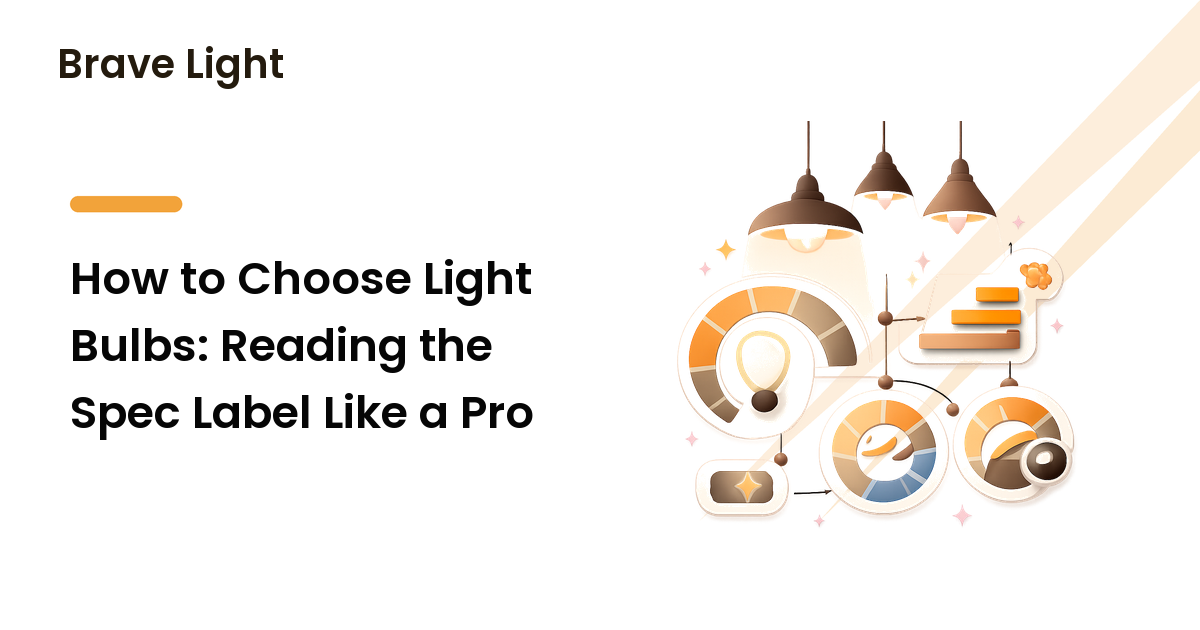
Here's the takeaway up front: a bulb is right for a room when three numbers match the job — lumens (how much light), Kelvin (the color of the light), and CRI (how true colors look under it). Watts tell you what the bulb costs to run, not what it does. Learn to read those three off the label and you'll stop returning bulbs.
Why wattage stopped being useful
Watts measure energy a bulb consumes, not light it produces. With incandescent bulbs that distinction didn't matter, because they were all roughly equally inefficient — a 60W bulb always gave about the same light. So "60-watt" became shorthand for a brightness everyone understood.
LEDs broke that shorthand. A modern LED can produce that same brightness on 8 to 9 watts. So when a box says "60W equivalent," it's translating: this LED is as bright as the old 60W bulb you remember, but draws a fraction of the power. The "equivalent" claim is a rough marketing approximation. The honest number — the one that's standardized and comparable across every brand — is lumens. Buy lumens, and the equivalence claims become irrelevant.
The four numbers that actually matter
1. Lumens — the real measure of brightness
Lumens are the total light output. This is the number to anchor on. As a rough map from the old wattage world:
- 450 lumens ≈ old 40W
- 800 lumens ≈ old 60W
- 1100 lumens ≈ old 75W
- 1600 lumens ≈ old 100W
Use these as starting points, then adjust for the room. A bedside reading lamp is happy around 450 lumens; a kitchen task fixture over a counter wants far more. The mistake to avoid is replacing "watt for watt" without checking lumens — manufacturers vary, and an 800-lumen bulb from one brand and a "60W equivalent" from another are not guaranteed to match.
2. Color temperature — measured in Kelvin
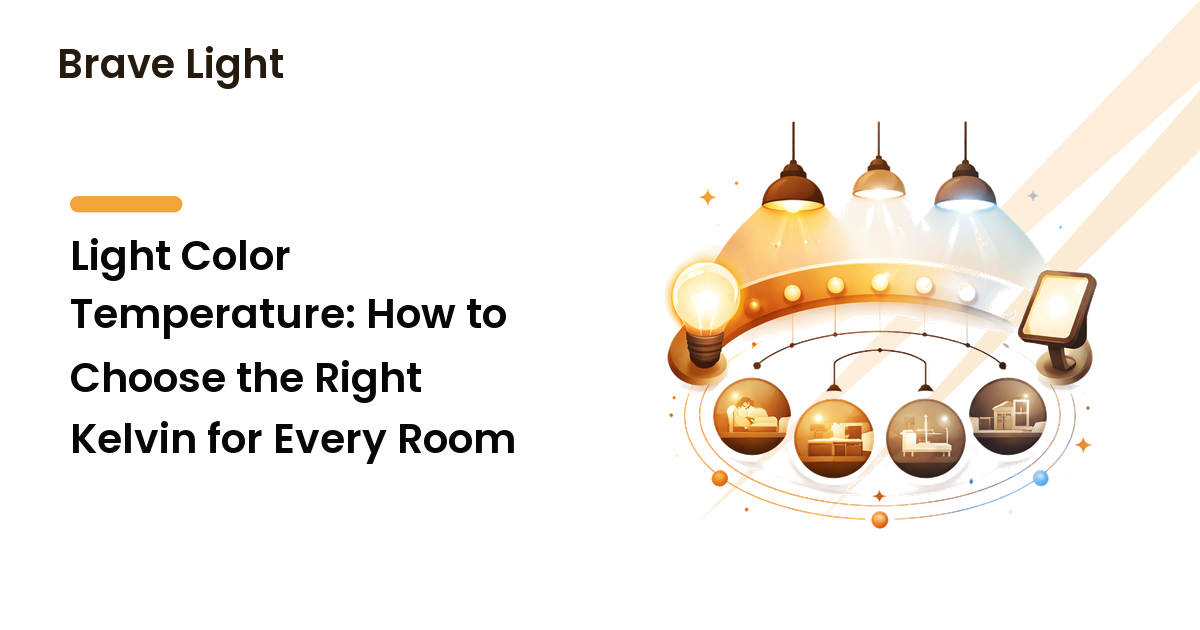
This is the number that causes the most regret, because a bright bulb in the wrong color makes a whole room feel off. Color temperature is measured in Kelvin (K), and lower is warmer:
- 2700K — warm white, the cozy yellow of old incandescent bulbs. Living rooms, bedrooms, dining.
- 3000K — soft white, slightly crisper. A safe all-rounder, common in kitchens and bathrooms.
- 4000K — neutral/cool white. Garages, laundry, task-heavy workspaces.
- 5000K+ — daylight, distinctly blue-white. Great for a workbench or makeup mirror, harsh and clinical in a lounge.
The hard part isn't picking a number — it's consistency. The single most common lighting mistake in a home is mixing color temperatures in the same sightline, so one lamp glows yellow and the next glows blue. The eye reads that as "something's wrong" without knowing why. Pick one color temperature per room (or per visible zone) and stick to it, the same way a consistent base makes the rest of a room's home lighting design predictable.
3. CRI — the number nobody reads, and should
CRI (Color Rendering Index) is a 0–100 score for how accurately a light shows the true color of what it falls on, compared to natural daylight (which scores 100). It's the difference between food looking appetizing and looking grey, between skin tones looking healthy and looking sickly.
A cheap bulb might be plenty bright and the right Kelvin but have a CRI of 80 — and reds and skin tones will quietly look dull. Aim for CRI 90 or above anywhere people, food, or appearance matter: kitchens, bathrooms, dining rooms, dressing areas, and anywhere you'd take a photo. Below 90 is acceptable in a garage or closet where nothing needs to look its best. CRI is the spec brands bury because it's where cheap bulbs cut corners — which is exactly why checking it separates a good buy from a bad one.
4. Dimming compatibility — the gotcha that ruins the experience
"Dimmable" on the box does not mean it'll dim cleanly on your switch. LED dimming is where most after-the-fact complaints come from: flicker, buzzing, a narrow dimming range, or the bulb dropping out entirely at low levels. The cause is almost always a mismatch between an LED bulb and an old dimmer designed for incandescent loads.
If you dim, confirm two things: the bulb says dimmable, and your dimmer is rated for LED loads (sometimes labeled "CL" or "trailing-edge"). When a dimmable LED flickers or buzzes, replace the dimmer before you blame the bulb — that one swap fixes the large majority of cases.
The codes that decide if it physically fits
Two short codes on the label tell you whether the bulb fits the socket and looks right in the fixture:
- Base code — the socket. E26 is the standard screw base in North America; E12 is the smaller "candelabra" base in chandeliers and decorative fixtures; GU10 and GU24 are twist-and-lock pin bases in recessed and track fittings. Bring the old bulb or note the code; a perfect bulb in the wrong base is a return.
- Shape code — a letter and a number. A19 is the classic household bulb shape. BR30 and PAR are reflector shapes for recessed cans and spots. The number is the diameter in eighths of an inch (so BR30 is 30/8 ≈ 3.75 inches across) — useful when a fixture has a tight opening.
A worked example: re-bulbing a kitchen
Say you're redoing a kitchen with six recessed ceiling cans plus an under-cabinet strip, and the old bulbs made the counters look dim and the food look grey.
- Sockets: the recessed cans take BR30, E26 base. Note it before shopping so shape and base are settled.
- Brightness: a kitchen is a task room. Aim higher than living-room levels — roughly 800 lumens per can gets you to bright, even coverage across six cans rather than the gloomy pools cheap low-lumen bulbs leave.
- Color: pick 3000K for the whole room — crisp enough to feel clean, warm enough not to feel clinical — and use the same 3000K under-cabinet strip so the counter light doesn't clash with the ceiling.
- CRI: here's the fix for "grey food." Buy CRI 90+. That single spec is why the tomatoes and the wood cutting board suddenly look right.
- Dimming: if the cans are on a dimmer, buy dimmable bulbs and confirm the dimmer is LED-rated. If it's an old incandescent dimmer, swap it — otherwise expect flicker.
Six matched 800-lumen, 3000K, CRI-90, dimmable BR30 bulbs on an LED-rated dimmer will transform that kitchen far more than any single "brighter" bulb would, because every number is doing its specific job.
Common mistakes and why people make them
- Buying by watts. The habit is 100 years old and the box still prints "equivalent." Anchor on lumens instead.
- Mixing color temperatures. People buy bulbs on different trips and grab whatever's in reach. Note your room's Kelvin and buy to it every time.
- Ignoring CRI. It's buried because it's where cost is cut. If the label hides CRI entirely, assume it's low.
- Trusting "dimmable" alone. The bulb is only half the system; the dimmer is the other half. Match both.
- Forgetting the base/shape codes. The most maddening return — a perfect bulb that physically won't fit.
Edge cases and caveats
- Enclosed fixtures trap heat, which shortens LED life. Look for a bulb rated "enclosed fixture rated" for any sealed globe or fully covered ceiling fixture.
- Outdoor and damp locations need a damp- or wet-rated bulb; an indoor bulb in a porch fixture will fail early.
- Three-way bulbs need a three-way socket; a standard bulb in one just runs at full output.
- Smart bulbs often fix the color-temperature problem in software — many shift Kelvin on demand — but check their CRI too, as some trade color accuracy for tunability.
The one trick to remember
Ignore the big number on the front of the box. Turn it over and read the Lighting Facts panel: lumens for brightness, Kelvin for color, CRI for color accuracy. Match those three to the room, confirm the base/shape fits and the dimming is compatible, and you will buy the right bulb the first time — every time.
FAQ
How many lumens do I actually need for a room?
It depends on the room's job and size, not a single rule. Start from the wattage map (800 lumens ≈ old 60W) and adjust: task rooms like kitchens and offices want more total light, lounges and bedrooms want less and warmer. For ceiling fixtures, add up the lumens across all the bulbs to judge whole-room brightness, not one bulb at a time.
What color temperature is best for a home?
2700K–3000K suits most living spaces — warm enough to feel comfortable. Use 4000K or higher only in task and utility areas. The most important thing is consistency: keep one color temperature within each visible zone so lamps don't clash.
Is a higher CRI always better?
For anything where appearance matters — kitchens, bathrooms, dining, dressing areas — yes, aim for 90+. In a garage, closet, or attic, a CRI in the low 80s is fine and usually cheaper. Spend on CRI where people and food are, save it where they aren't.
Why does my dimmable LED flicker or buzz?
Almost always a dimmer mismatch. Many older dimmers were built for incandescent loads and don't handle the low power LEDs draw. Confirm the bulb is dimmable, then replace the dimmer with one rated for LED ("CL" or trailing-edge). That swap resolves most flicker and buzzing.
Can I mix LED bulbs from different brands in one fixture?
You can, but match the specs, not the brand. Two bulbs at the same lumens, same Kelvin, and similar CRI will look consistent even from different makers. Mismatched Kelvin is what makes a multi-bulb fixture look patchy, so check that number most.
Buy the right bulb the first time
The spec label is doing you a favor — it's the most honest part of the box. Read lumens, Kelvin, and CRI, confirm the base, shape, and dimming, and the guesswork disappears. For the bigger picture of how these bulbs fit into a layered, room-by-room plan, explore more practical lighting guidance at bravelight.net and light every space with intent.