Good lighting is the difference between a room that feels finished and one that feels flat. Yet most homes are lit by whatever fixture happened to come with the ceiling, plus a lamp or two added later. The result is usually one of two problems: a single harsh overhead light that flattens everything, or a patchwork of mismatched bulbs that never quite agree on color.
You can fix both with a plan. The core idea behind home lighting design is simple: light a room in layers, choose the right brightness and color for each layer, and control glare so the light source itself never becomes the thing you notice. This guide walks through that process room by room, with concrete numbers and the reasoning behind each choice.
The Three Layers of Light
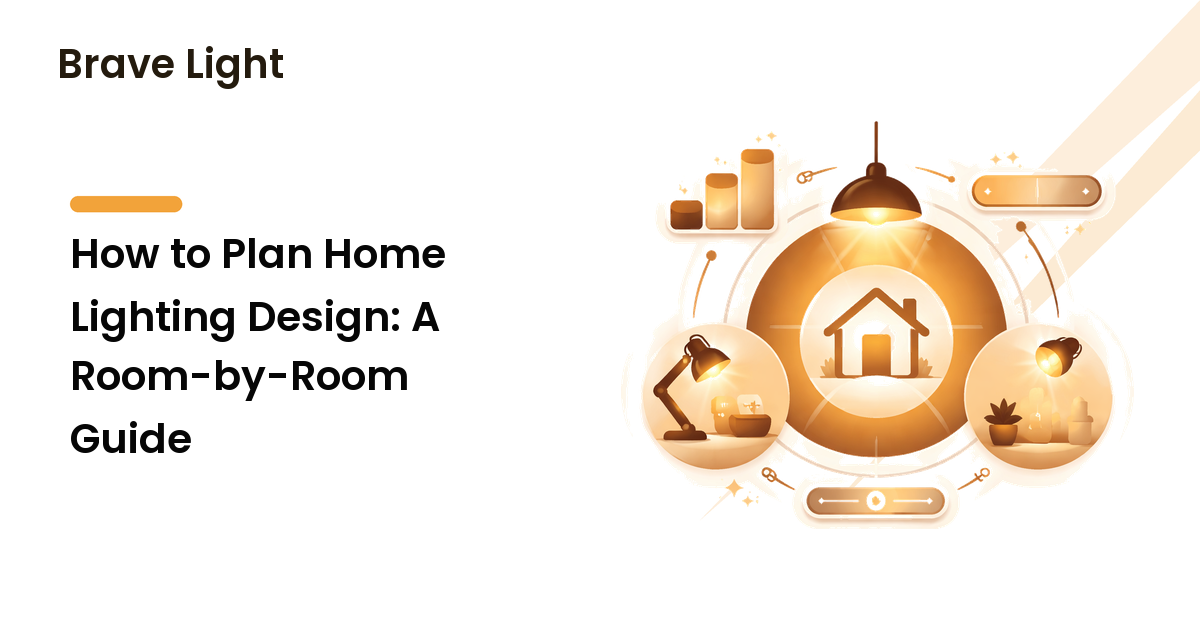
Every well-lit room combines three layers. Get the mix right and almost any fixture choice will work.
Ambient (general) light
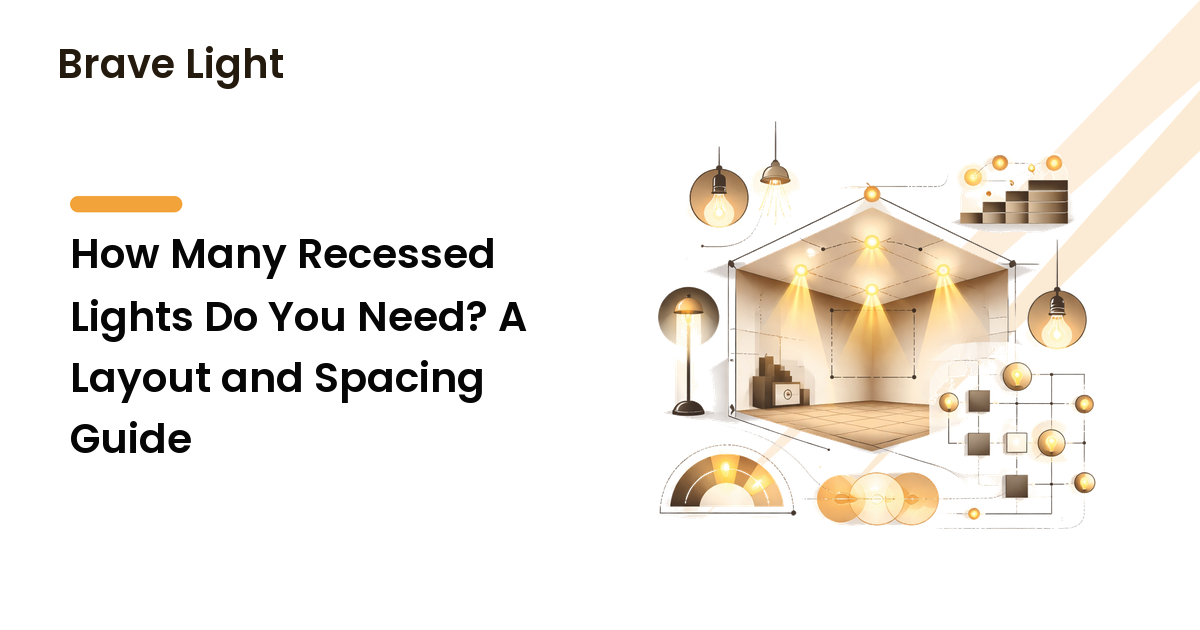
Ambient light is the base layer that lets you move around safely and see the whole space. It usually comes from ceiling fixtures, recessed cans, or large pendants. The goal is even, soft fill — not a single bright point. If you only do one thing, make the ambient layer dimmable, because the amount of general light a room needs at noon and at 10 p.m. is very different.
Task light
Task light is aimed where you actually do things: a kitchen counter, a desk, a reading chair, a bathroom mirror. Task lighting should be brighter and more focused than ambient, and positioned so your own body doesn't cast a shadow onto the work surface. Under-cabinet strips, desk lamps, and adjustable wall sconces are the workhorses here.
Accent light
Accent light adds depth and interest — it highlights art, plants, a textured wall, or shelving. Accent light is the layer people skip, but it's what makes a room feel designed rather than merely illuminated. A good rule of thumb is to make accent light noticeably brighter than the surface around it so the eye is drawn to it.
When all three layers are present and independently controllable, you can shift a room from "bright and functional" to "warm and relaxed" without touching a single bulb — just the switches and dimmers.
How Much Light Do You Actually Need?
Brightness is measured in lumens (total light output), not watts (which only measures energy use). As a starting framework, designers often think in terms of light per square foot, adjusted for how the room is used:
- Living rooms and bedrooms: lower overall levels, warm and relaxing — lean on lamps and layered sources rather than one bright ceiling light.
- Kitchens and bathrooms: higher overall levels, with strong, glare-free task light exactly where you prep food or look in the mirror.
- Home offices: bright, even task light on the desk plus enough ambient fill to avoid the eye strain of a single bright pool in a dark room.
These are starting points, not laws. The honest answer is that you should aim a little high and then add dimming, because it is far easier to turn good light down than to wish a dim room were brighter.
Color Temperature: Warm vs. Cool
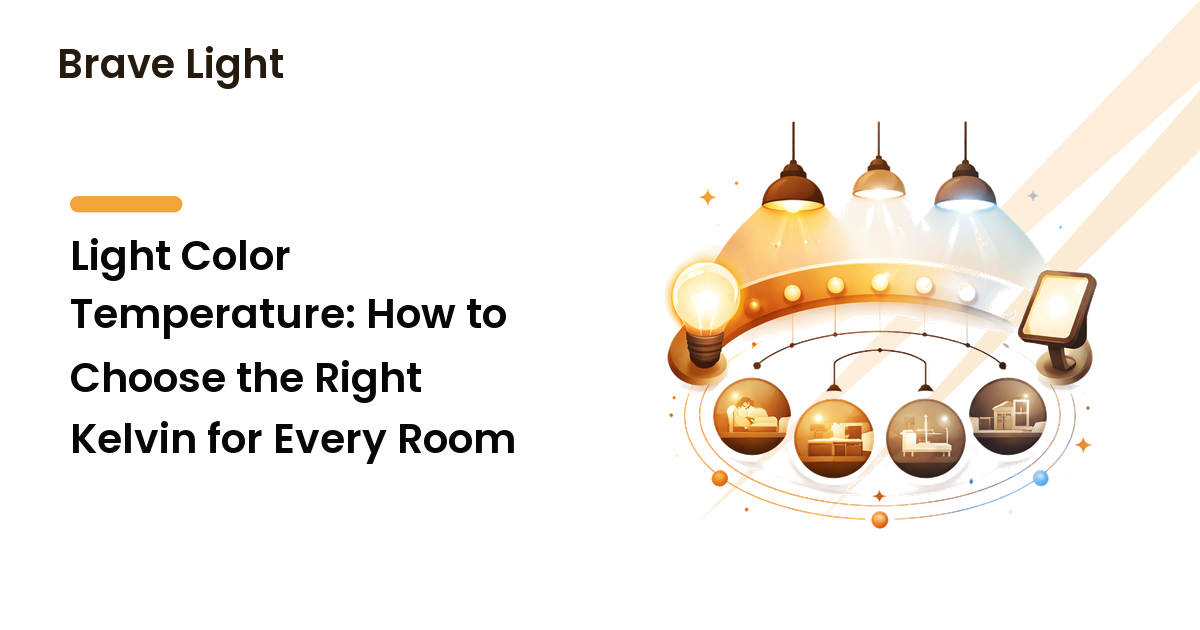
Color temperature is measured in kelvin (K) and describes whether light looks warm (yellow) or cool (blue-white):
- 2700K–3000K (warm white): cozy and relaxing. Best for living rooms, bedrooms, and dining areas.
- 3500K–4000K (neutral white): clean and alert. Good for kitchens, bathrooms, and workspaces.
- 5000K+ (daylight): crisp and energizing, but can feel clinical at home. Useful for detailed task work or garages.
The single most common mistake in home lighting is mixing color temperatures in the same sightline — a warm lamp next to a cool ceiling light reads as "something's off" even if you can't name it. Pick a target temperature per room and keep every bulb in that room within a few hundred kelvin of it.
One spec worth checking is CRI (Color Rendering Index), which describes how accurately a light shows colors. A CRI of 90 or above is worth choosing in kitchens, bathrooms, and anywhere you care how skin, food, or fabric looks. Lower-CRI bulbs can make a room feel subtly dull no matter how bright they are.
Controlling Glare
Glare is light hitting your eye directly instead of bouncing off surfaces. It's tiring and it makes a room feel cheap. Three habits prevent most of it:
- Shield the source. Use shades, diffusers, or recessed trims so you see the light's effect, not the bare bulb.
- Bounce light off ceilings and walls. Indirect light is softer and more flattering than a naked downlight.
- Mind the angle. Aim adjustable fixtures so the beam lands on the task or feature, not back toward where people sit.
A Room-by-Room Starting Plan
Here's how the layers come together in practice.
Living room
Start with dimmable ambient light, then add two to three lamps at different heights for warmth and reading. Use accent light on a bookshelf or piece of art. Keep everything in the 2700K–3000K range for a relaxed feel.
Kitchen
Ambient ceiling light for the whole room, plus dedicated under-cabinet task light on every counter you work at. Neutral white (3500K–4000K) and high CRI help you judge food and colors accurately.
Bedroom
Soft, warm ambient light on a dimmer, bedside task lamps you can read by without disturbing a partner, and ideally a low-level night setting. Avoid bright cool light here — it works against winding down.
Bathroom
The big upgrade is putting task light beside the mirror (at face height) rather than only above it, which eliminates the harsh shadows that overhead-only lighting casts. Neutral-to-daylight white with high CRI gives you an honest reflection.
Home office
Bright, even task light on the desk, positioned to the side so it doesn't reflect off a screen, plus ambient fill to reduce the contrast between a bright desk and a dark room. Neutral white keeps you alert without the harshness of full daylight bulbs.
Putting It Together
Plan in this order and the rest gets easier: decide the mood and color temperature for each room, place the task light where work actually happens, add ambient light on a dimmer as the base layer, then sprinkle in accent light for depth. Choose fixtures by type and function first, and let brand and finish be the last decision rather than the first.
If you want to go further, two natural next steps are setting up smart and dimmable controls so each layer can be adjusted by scene, and learning how to read a bulb's spec label so the lumens, kelvin, and CRI you planned for are what you actually buy.
FAQ
How many lumens do I need per room?
Think in terms of use rather than a fixed number: relaxing spaces like living rooms and bedrooms need less overall light, while kitchens, bathrooms, and offices need more focused task light. Aim slightly high and add a dimmer so you can dial brightness down when you want it.
What color temperature is best for a home?
For most living spaces, warm white (2700K–3000K) feels cozy and inviting. Use neutral white (3500K–4000K) in kitchens, bathrooms, and workspaces where you want a cleaner, more alert feel. The key rule is to keep one consistent temperature within each room.
Why does my room feel dim even with a bright bulb?
Usually it's a single overhead source doing all the work. One bright point creates harsh shadows and dark corners that read as "dim." Adding task and accent layers spreads light around the room and makes it feel brighter at the same total output.
Should every room be on a dimmer?
Dimmers are one of the highest-value, lowest-cost upgrades because they let a single fixture serve both bright and relaxed needs. They're especially worth it in living rooms, bedrooms, and dining areas where the mood changes through the day.
What's the most common home lighting mistake?
Mixing warm and cool bulbs in the same room. Even people who can't name the problem will feel that something looks off. Standardize the color temperature per room before worrying about anything else.
Ready to light your space with intention? Explore more room-by-room plans and fixture guides at Brave Light.